
This analysis applies to England, Wales and Northern Ireland. Scotland, which operates a separate income tax system, is not covered.
Income tax is one of the UK government’s largest sources of revenue, paid by roughly 32 million taxpayers. While the system is progressive by design, it contains features that materially alter tax rates over relatively narrow income ranges.
One such feature — the withdrawal of the personal allowance above £100,000 — has led to widespread claims that income above this level is “taxed at 60 per cent”. That statement is accurate in a narrow sense, but misleading when applied to overall take-home pay.
To understand why, it is necessary to distinguish between effective and marginal tax rates.
Effective tax rates
The effective tax rate is defined as total income tax paid divided by total gross income. It compresses a complex, multi-band system into a single summary measure.
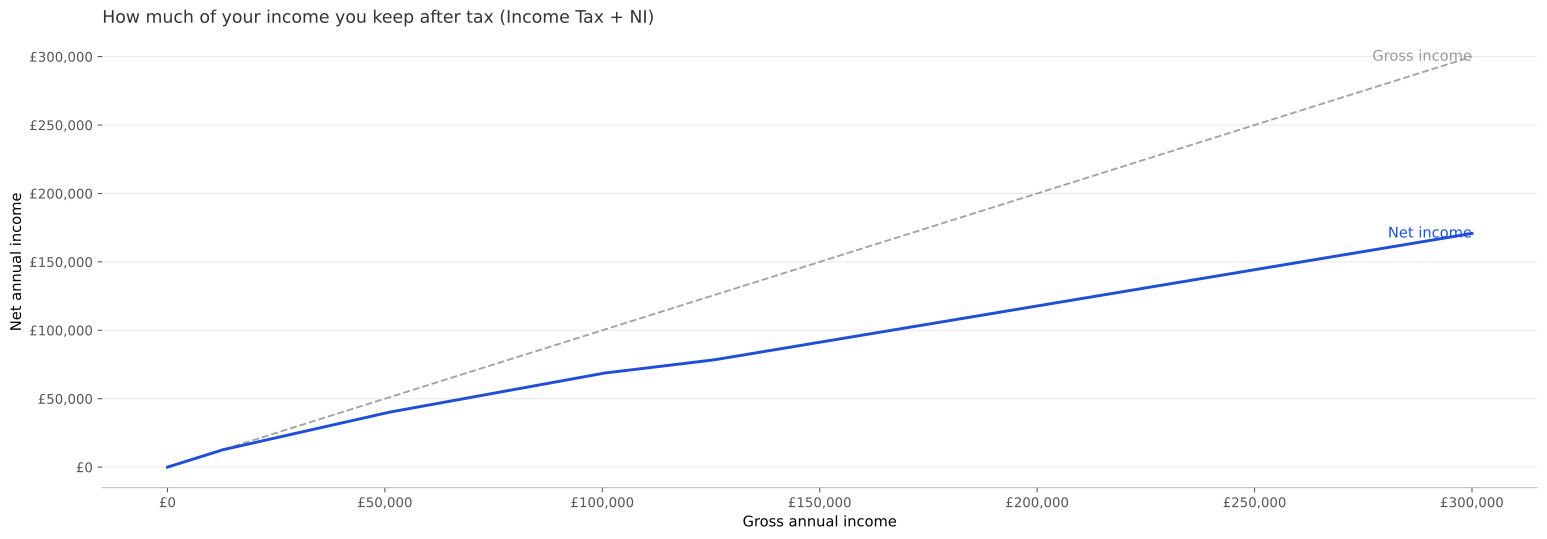
Between £100,000 and £125,140, the personal allowance is gradually withdrawn at a rate of £1 for every £2 earned.
This mechanism raises the effective marginal tax rate in this range to 60 per cent, despite the headline higher-rate band remaining at 40 per cent.
By £150,000, total income tax paid reaches £58,714, corresponding to an effective rate of 38 per cent.
At £250,000, the effective rate rises to approximately 42 per cent, an increase of only three percentage points over the previous £100,000 of income.
The personal allowance taper therefore produces a sharp increase in effective taxation over a relatively narrow income band, before stabilising again at higher income levels.
The taper was introduced in 2010 and has not been adjusted for inflation, meaning it now affects a growing share of higher-earning taxpayers.
At very high incomes, effective tax rates continue to rise, but at a diminishing pace.

By around £1 million of gross income, the effective income tax rate converges towards 45–46 per cent.
Marginal tax rates
While effective tax rates describe overall tax burdens, marginal tax rates determine incentives. They measure how much tax is paid on the next pound earned.
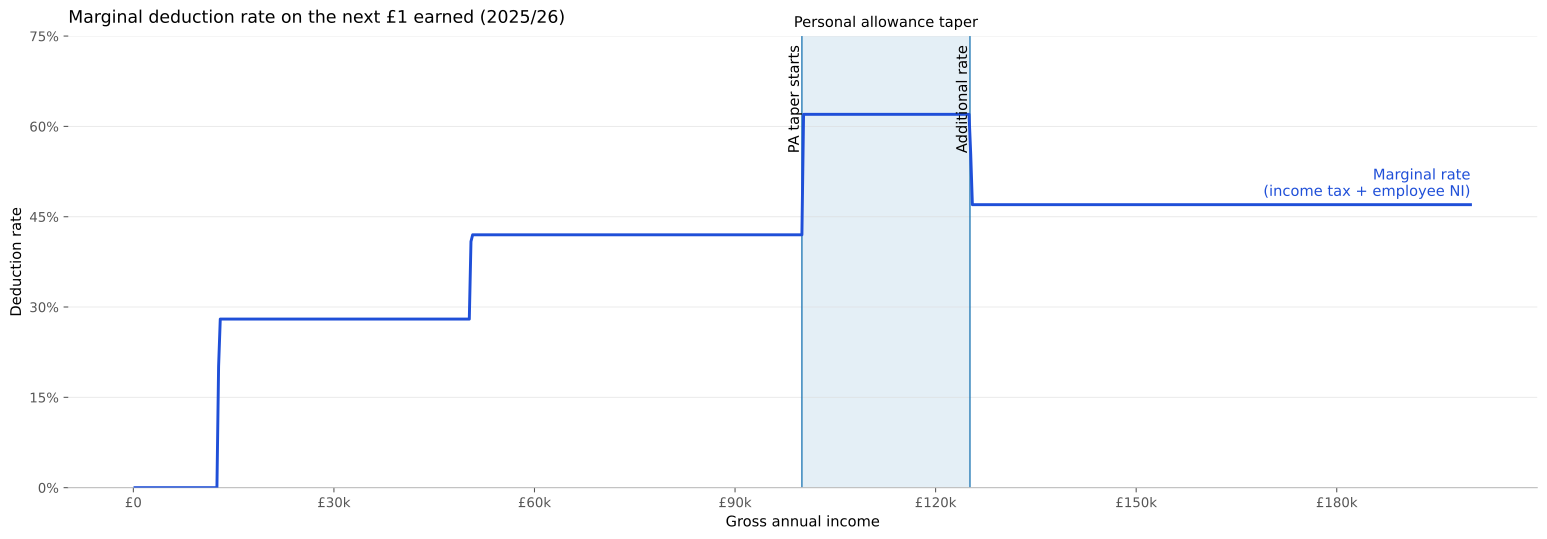
The most pronounced increase occurs between £100,000 and £125,140, where the withdrawal of the personal allowance raises the marginal rate to 60 per cent.
The distinction between marginal and effective rates explains why income above £100,000 can face very high taxation at the margin, while overall take-home pay continues to rise steadily.
 Monadic Dawn — Build better life
How many taxpayers are affected?
To place these thresholds in context, it is useful to examine their position within the income distribution.

Around 80 per cent of UK taxpayers earn less than £50,000.
Only a small fraction earn enough to enter the personal allowance taper, and fewer still reach the additional-rate threshold.
Because income is unevenly distributed within percentiles, tax thresholds may fall inside percentile bands, introducing minor rounding effects at the top of the distribution.
Sources and methodology
- HMRC percentile income statistics
https://www.gov.uk/government/statistics/percentile-points-from-1-to-99-for-total-income-before-and-after-tax - UK income tax rates and thresholds
https://www.gov.uk/income-tax-rates - National Insurance contribution rates
https://www.gov.uk/national-insurance-rates-letters